Rose Floral Notes in Perfumery
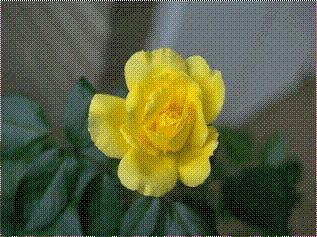
Very little introduction is required for the Rose. Yet despite the fact that there are more than 10,000 species only 3 are used commercially for the production of Rose Oils and Absolutes.
Rosa damascena - a pink rose for the production of Rose Oil ( = Rose Attar, Rose Otto)
The greatest quality without parallel comes from the Valley of Rosesin Bulgaria. The next best is the Rose Oil Anatolian from Turkey.
Rosa centifolia - "Rose de Mai". for the production of Rose Absolute. Southern France produces the best quality followed by Morocco.
Rosa gallica - the oldest of the roses, cultivated in Egypt for the production of the oil and absolute.
Analysis of the chemical composition of Rose reveals to us that the main components, known as the rose alcohols, are Citronellol, Geraniol, Nerol and Phenyl Ethyl Alcohol. The principle difference between the chemical composition of the oil vs. absolute is the loss of Phenyl Ethyl Alcohol from the oil
. Other components are small amounts of the acetates of the Rose Alcohols, Eugenol and traces of Rose Oxide, Damascone and more than 300 other components.
Not suprisingly a rose fragrance is usually founded on the Rose alcohols that are relatively cheap and readily available from aroma chemical suppliers. Their character as alcohols is such that they have smooth odours and are easily used. Modification comes in the form of the Rose Oxide and Damascone to give lift and radiance.
Modification with green notes (esp. for a Tea Rose type) helps to impart a natural tone and the use of Clove Bud Oil
gives depth and sweetness.
Blending is not necessary per se but careful balancing of the rose alcohols carries out this function PEA is very hard to overdose but lacks diffusion.
Fixation can be achieved with Trichloro methyl phenyl carbinyl acetate (Rose Crystals, Roseacetal), Guaicwood Oil. Musks can be used as with all fragrance types but note that overdosing leads to sweet a character.
.
Basics
. |
||||||||||||||||||||||||||||||
Modifiers
. |
||||||||||||||||||||||||||||||
Blenders
. |
||||||||||||||||||||||||||||||
Fixatives
. |
||||||||||||||||||||||||||||||
Novel Effects
.NB. These recommendations are for guidance and hints - do not be afraid to try as many different materials as possible |
|
Phenyl Ethyl Alcohol
Citronellol Geraniol Rose Oxide PADMA (Phenyl Acetaldehyde Dimethyl Acetal) cis-3-Hexenol Clove Bud Oil Methyl Ionone Geranium Oil Vetivert Oil Guaicwood Oil Rose Oil Rose de Mai Absolute Aldehyde C11 Undecylenic Galaxolide |
45.00
30.00 15.00 0.10 0.50 0.10 0.50 3.00 1.40 0.50 1.00 0.20 0.10 0.10 2.50 |
|
100.00 |